
The Domestic Church: When the Path Gets Thorny

[A parent set out to sow the philosophical truths and virtues of faith in God in their child’s heart]. And as he sowed, some seed fell on the path and was trampled, and the birds of the sky ate it up. Some seed fell on rocky ground, and when it grew, it withered for lack of moisture. Some seed fell among thorns, and the thorns grew with it and choked it. And some seed fell on good soil, and when it grew, it produced fruit a hundredfold.” After saying this, he called out, “Whoever has ears to hear ought to hear.
~St. Luke 8:5-8

We continue our exploration of the parable of the seed and how to apply it to the parenting of adolescents by comparing the fertility of the soil to the condition of the home environment. We discussed how necessary it is for the Lord to be acknowledged and reverenced as the foundation of our life—the “soil” of our being, the why of our existence. That is just the beginning.

Recall Jenny, the bird, who has to learn why she is expected to leave the safety of the nest before she can act on what she is created to be. She must overcome her fear by understanding that there is no other option for her to be happy unless she learns to fly—it is what she was created for. Oh, that it would be that easy for us to know what we are designed for and how to live in that identity.

Let’s discuss how we can further stabilize the environment of our home so that the seed of Catholic philosophy germinates the “what” and “how” of our adolescents’ identity by exploring some of the marks of a holy family. We will be drawing from the counsel Father Sebastian Walshe offers in his excellent book, “Always a Catholic.” (See Resource Box.)

Integrity

Our adolescents’ conclusions about identity ultimately depend on the influence we have on them. As parents, our authentic witness to the faith in family life is not just important, it’s integral. When we say one thing and do another, it can cause our children to disbelieve the existential answers of Catholic philosophy and doubt the veracity of practicing faith in God as Catholic Christians.

Let’s expand on that: If the primary influencers in Jenny’s life don’t model to her that the Catholic philosophy of life is the key to their happiness and contentment, she will search for happiness and stability in things that are incapable of providing it. This is not just a possibility, it’s a potential consequence we must urgently address. Choosing temporal answers for eternal security is fleeting, subjective and influenced by the external factors of a hedonistic society. Jenny will be inclined to prioritize self-interest, neglect her responsibility for her actions, and potentially form harmful relationships.

Some questions to consider: Have I answered for myself where I look for happiness? Has my faith in God and trust in his Church grown past the “it’s just what we do” mentality? Is every choice I make rooted in the understanding that the Lord my God cares about every little detail of my life? Do my children witness in me a profound spiritual joy in desiring and possessing the good only the Lord can give? Living in God’s love is not just a duty, it’s a source of profound joy and fulfillment. When we fix our eyes on the principles of the Shema (Deuteronomy 6), we are guided by the Holy Spirit of God to “love the Lord your God with all your heart and with all your soul and with all your might” (v.5); we order ourselves to God rather than allowing the culture to order our lives. Through the help of the Holy Spirit, this focus enables us to strive toward the goal of rearing holy children.

Communion

The root of understanding does not fail.
~Wisdom 3:15b

In his book, Father Walshe says, “Communion is when members within the family share one life. Each person knows, loves, is known by, and is loved by all others.” How are we doing at family communion? How often do we do life together? Do our adolescents know beyond a shadow of a doubt that our home is a refuge of acceptance and understanding? Adolescents are more likely to rebel against their family community if they have established a stronger sense of community outside the family structure. That is not to say we insulate our children from society. Instead, we maintain a balance between the benefits of society and the greater good of living, moving and having our being in God alone (Acts 17:28). Extracurricular activities are vital for building community, but they are a poor facsimile for determining what we believe we are to be and how we are to live.

How can we assure that our adolescents’ primary faith community remains intact as they pursue the good found in other pursuits? Father Walshe follows the principle that the human heart cannot live in a vacuum in his counsel to parents. If there is a void of camaraderie in the home, our adolescents will search for something to fill it. When we proactively build family and faith communities early in our children’s lives, we are providing them with the emotional stability they need
to live happily in the world, yet not of the world.

Here is a suggestion on how to form a strong family community, drawn from experience and observation: Regular family meals, shared prayer times, and engaging in family activities like hiking or volunteering together can all contribute to a strong family community.

Be more present to your family than to any other person, interest or career; this can be monumentally hard to balance, especially in single-parent homes. Yet, our Lord’s grace extends in abundance to our insufficiency and brokenness when we rely on him to fill the void that sin or death may have caused. A word of counsel to parish communities: The Lord has called us to be united in caring for one another! Consider forming strong bonds with single-parent families by coming alongside them as reliable helpers in nurturing their children as if they were our own family.

Religion that is pure and undefiled before God and the Father is this: to care for orphans and widows in their affliction.
~St. James 1:27

Order and Harmony

When the family is in harmony, the children are well brought up, the domestics are in good order, and neighbors, friends, and relations enjoy the fragrance. But if it be otherwise, all is turned upside down and thrown into confusion.
~St. John Chrysostom

When we act together as a whole, we teach our children to prioritize the common good of the family over individual interests. This begins with our marital relationship, marked by mutual love and respect between a husband and wife. Read that sentence again, friends! This is not readily witnessed in our culture, and many of us came from homes where it wasn’t modeled.

No matter how many years we have been married, it is never too late to deepen our unity in our relationship through sacramental living and sacrifice. Remember that the apex of our union is the Lord Jesus, and we stand together in a holy trinity of marriage from which life flows. The Holy Family is our model. They experienced poverty, great struggles, hardships and misunderstandings, yet remained integrated, thriving in their identity. Pray with them as you parent.

Be imitators of God, as beloved children. And walk in love, as Christ loved us and gave himself up for us, a fragrant offering and sacrifice to God.
~Ephesians 5:1-2

Virtue begets the Holy Spirit’s gift of wisdom, understanding, counsel, fortitude, knowledge, piety and reverence for the Lord. Like any gift, the receiver must open it to be enjoyed, and once we do, the Lord enables us to exercise it and grow strong in our relationship. Here’s the lovely thing: As virtue puts down roots in our hearts and minds, virtue grows, and we bear the fruits of God’s Spirit in our homes: love, joy, peace, forbearance, kindness, goodness, faithfulness, gentleness and self-control. When our children recognize the gifts of order and harmony between us, they are more likely to embrace it as the gold standard in all their relationships. (See Resource Box.)

Consider ordering your family life around the liturgical calendar, celebrating life by the Church year. Many books are available to help you establish a framework of Christian identity. The authors do the work for you, from what to cook for dinner to what to learn from whatever the liturgical calendar has on its “agenda.” (See Resource Box.)

When the Seed of Faith Seems to Die

One last word for the many parents who have done everything right in the best way they knew how to raise children with a Catholic worldview and the vibrant practice of Catholic Christianity. Ultimately, our children are free moral agents who make their own decisions about life and how to live it. When they reach their young adult years, many children may stray from or even reject their faith heritage, causing parents to despair over their choices. They may choose to return to their faith in God, or they may not. We will discuss this next month, summarizing the birds, thorns and rocks that threaten the seed of faith as symptoms of a deep-seated contagion present in the soil of the human condition, and how we can pray against the enemy’s presence in our children’s lives.

Resources
“Always a Catholic” by Father Sebastian Walshe, O. Praem.

“Love & Respect: The Love She Most Desires; The Respect He Desperately Needs” and “Love and Respect in the Family: The Respect Parents Desire; The Love Children Need”
by Dr. Emerson Eggerichs

“The Catholic All Year Compendium: Liturgical Living for Real Life” by Kendra Tierney

“The Companion Book of Catholic Days:
A Guide to Feasts, Saints, Holy Days,
and Seasons” by Karen Edmisten

~I am a freelance writer. This post first appeared in a periodical.

The Domestic Church: How to Make the Home Fertile Soil for Adolescents

In the preceding blog, we started our exploration of the interior and exterior challenges that our adolescent and young adult children inevitably face as they mature. During these years, our responsibility as primary influencers in their lives becomes a priority of the highest order, more significant than we could have ever imagined when they were younger. Why is that? As our children’s personalities mature, they discover they have free will, which, combined with hormonal and social factors, takes center stage.

Our parenting requires a fair amount of psychological understanding and a bit more latitude as their world expands. Therefore, we often find ourselves feeling inadequate, even fearful. We remain on the stage as primary actors, but it gets a bit crowded. Now is not the time to exit the stage out of fear, pretending they will just grow out of it or that the choices they make don’t matter much in the long run.

As parents, our relationship with God, our prayer and our attention to the counsel in Sacred Scripture are foundational. They equip us with the courage and strength needed to navigate the challenges of parenting. When our adolescents witness the integrity of our faith in the way we live, it prepares the soil of their hearts and minds for the philosophical truths of our Catholic faith. Our faith is not just a personal belief but a powerful tool in shaping our children’s worldview.

Courage is the strength of the soul that comes from leaning upon God; trust is the firm belief that God loves your children even more than you do and that he will come to their aid.
~Sebastian Walshe

******

The Soil

[A parent set out to sow the philosophical truths of faith in God in their child’s heart]. And as he sowed, some seed fell on the path and was trampled, and the birds of the sky ate it up. Some seed fell on rocky ground, and when it grew, it withered for lack of moisture. Some seed fell among thorns, and the thorns grew with it and choked it. And some seed fell on good soil, and when it grew, it produced fruit a hundredfold.” After saying this, he called out, “Whoever has ears to hear ought to hear.
~St. Luke 8:5-8

This verse from the Gospel of Luke is a parable told by Jesus, illustrating the different ways people receive and respond to the Word of God. It serves as a metaphor for the various ways our children might respond to the philosophical truths of our faith.

Let’s consider that the soil in this parable lays the groundwork (pun intended) for enriching our children’s hearts with the elements necessary for a well-balanced existence. With a holy imagination, we can apply its truth to shaping our adolescents’ expanding environment while nurturing faith and virtue successfully.

What we discover is that amid our adolescents’ questions about their existence, some fascinating, even disturbing, explorations emerge that could be likened to the intrusion of the birds of the air, the rocks and the thorns. Experimentation with self-expression and alternative worldviews is natural and often necessary for their development, but they don’t necessarily take root.

Their developing psyche can make them somewhat thorny for a while, as they become acute detectors of phoniness and hypocrisy on the one hand, yet remain clueless about their own choices and behaviors on the other. We can witness in their lives what St. James describes in his epistle, “The one who doubts is like a wave of the sea that is driven and tossed about by the wind” (1:6). It can be quite a ride for the entire family! And just when you are ready to send them back to the cabbage patch, the tide shifts!

Believe it or not, these years can transform into some of the best years of raising children, depending on how we respond. Consider educating yourself now so that when your adolescent begins to question and doubt the philosophical foundation of Catholicism, you are prepared to guide them through these years. (See resource box)

Propagation

A combination of physical, chemical and biological factors determines soil fertility; without a balance between them, it’s nearly impossible for plants to thrive. It’s a science that, in most cases, requires constant attention if one hopes to yield a bountiful harvest. If the delicious tomato that grows in that soil asks the farmer, “Why am I here and Why am I a tomato?” The farmer answers, “Because the seed you were created to be was a tomato, and you had fertile soil to exist in.” Tomatoes never ask existential questions, but our adolescents do. How will we answer them?

When God commanded us to acknowledge him as God above all gods and to love and serve him with our heart, mind and strength (Dt 6:4-5), he was laying down the formula for yielding an abundant life. He went on to tell us how faithful devotion (religion) to him is worked out in the life of the home, which is often referred to as the “domestic church,” a term that emphasizes the importance of the family in nurturing and passing on the faith.

Take to heart these words which I command you today. Keep repeating them to your children. Recite them when you are at home and when you are away, when you lie down and when you get up. Bind them on your arm as a sign and let them be as a pendant on your forehead. Write them on the doorposts of your houses and on your gates.
~Deuteronomy 6:6-9

A religious belief system doesn’t simply rub off on children; it is absorbed through habitual reverence for God in the nitty gritty of daily life. By doing so, we integrate it into our children’s lives as the definition of their existence that forms the answer to the existential questions they will eventually have.

Religion

Man is by nature and vocation a religious being.

The Catechism of the Catholic Church states that we are, “by nature and vocation, a religious being. Coming from God, going toward God, man lives a fully human life only if he freely lives by his bond with God” (CCC 44). If our Catholic religion isn’t organic to our existence, if we don’t reverence God as the Alpha and Omega of our existence, we won’t be motivated to keep our bond with him, and the soil of our environment won’t be fertile. It’s simply not enough to take our children to Mass every week. Too many of us relegate worship of God to a box to be ticked, even an optional activity among the many lesser choices in life. Children then catch on that worshipping God is something you do rather than something you are. The effect of this is evidenced when they reach the age of reason.

Tom asks his parents, “Why are we Catholic? What’s the point of going to Mass? Why do I have to go to confession?” The parent is on the hot seat, and if they haven’t answered those questions for themselves, it’s even hotter! For instance, if the parent answers, “That’s just what we do,” or “Ask Father so-and-so about that,” Tom is less likely to turn to God to answer his existential questions because the primary voices in his life haven’t prioritized the integrity of belief with an evidential lifestyle.

When St. Paul reasoned with the Epicurean and Stoic philosophers in Athens, he challenged their misguided religiosity toward multiple gods by teaching them about the one True God. He summed up the religious response of Christianity by saying, “In him we live and move and have our being” (Acts 17:16-34). We can take his counsel, reverencing the Lord as the cause of our existence; we are providing the nutrients and structure of a well-ordered life, along with a strong self-identity that grows from that reverence and love for God.

Friends, just as a seed needs rich soil to thrive, our adolescents need a rich environment of beatitude (supreme blessedness) in our homes that nourishes their souls and psyches, enabling them to mature as human beings through these years of experimentation. When we actively guide our adolescents in establishing the philosophy of life contained in the Christian faith, we are forming the fertile soil to cultivate a stable self-identity.

Resources

YOUCAT (Youth Catechism of the Catholic Church) is a popular choice for catechesis. Available through Ignatius Press.

“Catholic Apologetics” is an online course from Seton Home Study that presents reasoned arguments to explain and justify the beliefs and moral code of the Catholic Church. You can find more information on signing up for the course at http://www.setonhome.org.

“Beginning Apologetics” and “Evidence for Catholic Moral Teaching” from Catholic Answers online courses. You can find more information at http://www.schoolofapologetics.com.

~I am a freelance writer. This post first appeared in a periodical.

Three Minutes of Grace

A DOCILE HEART

All our life is sown with tiny thorns that produce in our hearts a
thousand involuntary movements of hatred, envy, impatience,
a thousand little fleeting disappointments, a thousand slight worries,
a thousand disturbances that momentarily alter our peace of souls.
For example, a word escapes that should not have been spoken.
Or, someone utters something that offends us.
A child inconveniences you. A bore stops you. You don’t like the weather.
Your work is not going according to plan. A piece of furniture is broken. A dress is torn.
I know that these are not occasions for practicing very heroic virtue.
But they would be enough to acquire it if we really wished to.

~St. Claude La Colombière

******

CONSIDER

Some of us just aren’t born with a docile heart; we must acquire it. Obtaining it requires acceptance, even submissiveness to inconvenience, which is HARD! Do you feel me? Either it came naturally for St. Colombière, or the Spirit achieved it in him. As we read the quote, do we recognize those thousands of feelings he described? Do we realize the amount of murmuring and complaining we do? Are we quick to let others know how they have inconvenienced us? Do we keep a running tally of offenses?

It was not convenient for God to take on flesh and incarnate himself in our humanity. It was not convenient for our Lord Jesus Christ to be misunderstood, mocked or ridiculed, beaten and bruised. And it was certainly not convenient for him to die the slow death of crucifixion. And yet he did, without complaint, docile under the hand of the Divine Will—heroic virtue in action.

Friends, Jesus sometimes comes to us in distressing disguise. Let’s fast from complaining about this life’s tiny thorns and fleeting disappointments by fixing our gaze on the most perfect example of docile acceptance and heroic virtue, Jesus Christ.

PRAYER
Let us pray with St. Elizabeth of the Trinity:

O my God, Trinity Whom I adore, help me to forget myself entirely that I may be established in You as still and as peaceful as if my soul were already in eternity. May nothing trouble my peace or make me leave You, O my Unchanging One, but may each minute carry me further into the depths of your Mystery. Give peace to my soul; make it Your heaven, Your beloved dwelling, and Your resting place…. Come into me as Adorer, as Restorer, as Savior. O Eternal Word, Word of my God, I want to spend my life in listening to You, to become wholly teachable that I may learn all from You. Then, through all nights, all voids, all helplessness, I want to gaze on You always and remain in Your great light….
~Amen

ACT

Choose one thing you consistently complain about; ask the Holy Spirit to grant you the grace of docility, and resolve to stop complaining about it for the rest of your life!

~I am a freelance writer. This post first appeared in a periodical.

The Domestic Church: Climbing Lessons for Adolescents

Young people have enough energy to climb tall mountains of faith, hope, and love. If all we offer them are little molehills, they’ll simply go elsewhere for their challenges!
~Paul Lauer

We now examine the last of the Eight Beatitudes, which refers to the blessing of standing firm in the face of opposition to the faith. But before we can address the inevitability of adversity, even persecution, in living a godly and virtuous life, we need to consider ways to nurture a steady and unwavering faith in our children that grows with them, enabling them to tackle life’s twists and turns with unshakable resolve. As journalist Paul Lauer puts it, young people are up to climbing tall mountains as long as they have a purpose larger than existing on a molehill of mediocrity. Our role is to teach them to be secure in who they are, their beliefs, and the world around them, so they know how to climb the right mountains.

It is normal to assume that our children will embrace our religious identity as their own; that is our prayer, right? Still, existential questions that demand answers will inevitably fill their minds when they reach adolescence and adulthood. It is natural for them to question why they are doing what the family has determined they should do. Why do we go to Mass? Why are we Christian? Why do we honor the Lord’s Day? Why don’t we take the Lord’s name in vain? Why is sexual purity essential? Etc. We can guide children in righteousness, but if they have not formed a strong faith identity, they may not be convinced that standing firm for their Christian beliefs in the face of opposition is the right choice.

Integrating human development with spiritual development is hard work! The classic error we make as parents is overlooking our children’s doubts about their emotional or spiritual identity. They will undoubtedly try to find answers elsewhere if we shut down their existential questioning. Answers like, “That’s just what we do” and “It’s just the way it is” are inadequate for children as they develop a mind of their own. We need to be on our toes!

We must guard against punting our children’s doubts to the priest or the catechists, rather than taking the time and effort to help them find their answers. However, spoon-feeding them pat answers that we even have doubts about can force them into outright rebellion. I was 12 years old when I asked my father why we were Christian for the first time. His answer was inadequate: “Don’t ask that, just be glad we are.” That wasn’t what I needed to hear from him at that time. I needed a parent who was open to my doubts and willing to help me answer them.

On the other hand, allowing children to figure life out on their own isn’t a reliable option, since it puts them in the precarious position of bowing to peer and cultural beliefs that counter the abundant life the Lord promises. Active examination and discovery are always the best way to learn. As children mature, we can partner with them to examine life’s big questions from a biblical worldview and discover the best path for their unique personalities together as we answer their questions.

To best be prepared for our expanding task as parent-mentor, a bit of self-examination is necessary: Am I the primary influence in my child’s life? Do I prioritize my child’s emotional and spiritual development? Does my child witness a stable faith identity in me? Does she witness vibrance in my faith and understanding of God’s will for my life? Is our family spiritually engaged? Does our faith in God make a difference in how we order our lives? Does my child know beyond a shadow of doubt that I love and accept them for who they are? How can I improve? What can I do better? When we are open to self-examination, our children are influenced by our strong witness of faith and virtue.

There comes a time in our children’s lives that they ask the big questions about life, faith and existence. In upcoming blogs, we will explore improving our serve as parents of maturing children. Coupled with our fervent prayer for our children, we place ourselves in God’s hands as instruments in God’s sovereignty over our children’s lives. By this, we unite with the Lord to form saints for his glory and their blessing.

He totally emptied himself and did not allow himself to be concerned with
things he knew would never satisfy him. He knew in whose image he had
been made, of what greatness he was capable.
~St. Bernard of Clairvaux
(A comment on teenager St. Pancras and other young martyrs in the fourth century)

Know Thyself

Adolescence is a period of experimenting with unique ways to differentiate oneself from others. It is also the beginning of forming an independent identity apart from parental influence. It is healthy and normal for our children to question, even doubt, some of the beliefs we have tried to instill in them; knowing what we believe and why we believe demands examination. When Socrates instructed, “Know thyself,” he understood the necessity of self-awareness to navigate society, especially a society that forms truth by consensus rather than objective truth. When and how do we successfully prepare our children for this phase of their lives? We begin in early childhood.

It works this way: As we allow our children to experience the effects of disobedience and life’s adversities under our guidance, they become stronger humans. Jenny has been told not to touch the burner, but until she knows from experience that the stove burner is often too hot to touch, she won’t be as cautious near a stove. As hard as it is, we need to allow Jenny the experience of being burned. As Jenny matures, we have told her that lying is a sin against God and others, but until she experiences the effect of lying, she won’t be careful to always speak the truth. It’s up to us to help Jenny face the consequences of sin and hold her accountable for her actions.

As Jenny’s life experiences expand, she starts questioning the Christian worldview, but until other worldviews confront her, she won’t learn how to own and kindly defend her Christian worldview. If Jenny were a bird in the nest, this is where Jenny must learn to fly! And we must be the ones to teach her.

When Jesus told us we are blessed when we are persecuted and reviled, he showed us that life is hard when you don’t live like the majority around you, but it is hard for a reason: the blessing of fortitude and courage. Just as friction is necessary for fire, relational friction is essential for character building.

Jenny the bird needs to face the friction of fear of failure, the adversity of the wind, and the law of gravity before she can be blessed in being what she was created to be. Jenny, the adolescent, needs to face the friction of rejection by others and the adversity of revilement from others so as not to crash and burn in her faith in God. She is blessed with the reward of strong character, which the Lord promises through resilience in the face of opposition.

In subsequent blogs, we will discover ways to unite Jenny’s self-identity with her God-given identity. In the meantime, we have a worksheet to prepare your mind for assisting Jenny as she matures.

Parents, our children must find their way in the world, and we want them to work it through so that their life, faith and journey come from a place of authenticity guided by the Holy Spirit and rooted in truth. It’s rarely a straight line. However, the Holy Spirit’s grace goes before us, walks with us, and follows us always as we faithfully try to raise godly and virtuous children.

~I am a freelance writer. This post first appeared in a periodical.

Three-Minutes of Grace

ON KEEPING THE END IN SIGHT

I die every day!
~1 Corinthians 15:31

If we were to keep the imminence of our death in mind, we would never be overcome by sin: lust, which is fleeting, would not reign over us; we would never harbor anger against another human being; we would not love the possessions which pass away; and we would forgive every person who offended us. Therefore, beloved, let’s be zealous in carrying out the work we have committed ourselves to, and let’s travel to the end on the road which we have begun.
~St. Athanasius

******

CONSIDER

St. Paul wrapped up his first letter to the Corinthians by discussing Christ’s power over death and how that granted them resurrection from eternal death. He squeezed a little caveat in there for us to do in response to God’s great benevolence toward us in Christ’s resurrection: we are to die daily. He goes on to say, “Come to your right mind and sin no more” (1 Corinthians 15:34). The rest of the New Testament defines how a “right mind” thinks. St. John puts it this way:

Do not love the world or the things of the world. If anyone loves the world, the love of the Father is not in him. For all that is in the world, sensual lust, enticement for the eyes, and a pretentious life is not from the Father but from the world. Yet the world and its enticement are passing away. But whoever does the will of God remains forever.
~1 John 2:16-17

Just think how daily life would be different if we compared everything we did each day to the will of God! We’d throw away our to-do list filled with the empty nothings of our lusts (enticements of the world) and forget about ourselves! That would be a breath of fresh air, wouldn’t it? To consider our lives as sacrifices to the Lord requires coming to our right mind, the God-given one we aren’t accustomed to using. Let’s pray for our priests and diocese that we strive to do the will of God by dying to our will.

PRAY

Lord and Savior of my life, like your friend, Lazarus, you desire to set me free from “death cloths” to know and enjoy the abundance of the good life you give me here and now and in eternity. Please forgive me for displacing my love in this world’s enticements and the pretentious attitude of thinking I deserve them. Holy Spirit, help me always to have an open spirit toward others, not holding on to grievances but praying for their well-being. I choose you as my traveling companion; reach into my heart and mind and toss away anything hindering me from entering eternal life with the LORD! ~Amen

~I am a freelance writer. This post first appeared in a periodical.

The Domestic Church: Teach Your Child How to Be Merciful

Children are more likely to absorb the Beatitudes of merciful and peaceful spirits when we adopt them as attitudes in our own hearts, display them in our actions, and weave them into the fabric of our lives. Jesus taught us, as parents, to be the salt of the earth and the light of the world in our corner of his world. Let’s explore how we can do that more effectively.

Blessed are the merciful,
for they will be shown mercy …
Blessed are the peacemakers,
for they will be called children of God.
~St. Matthew 5:7, 9

Like seeds, we must cultivate mercy and peace by nurturing empathy in our children. It’s probably no surprise that not all children are biddable and selfless. Kindness doesn’t come naturally for all children, but that doesn’t mean a child can’t make it a habit of the heart. Some children seem to thrive on conflict, but that doesn’t mean they can’t learn to be peaceable. So, how do we instill these dispositions of the heart in our children?

Jesus doesn’t give us a list of do’s and don’ts for peace or mercy, but the 100 verses in St. Matthew’s Gospel that follow the Beatitudes Jesus taught on living a virtuous life demonstrate them. Jesus gives this lesson that we can apply to how mercy and peace can transform our children’s lives.

You are the salt of the earth. But if salt loses its taste, with what can it be seasoned? It is no longer good for anything but to be thrown out and trampled underfoot. You are the light of the world. A city set on a mountain cannot be hidden. Nor do they light a lamp and then put it under a bushel basket; it is set on a lamp stand, where it gives light to all in the house. Just so, your light must shine before others, that they may see your good deeds and glorify your heavenly Father.
~St. Matthew 5:13-16

Just as salt is meant to season food and light to brighten the darkness, we want to help our children understand that their dispositions of heart can season and brighten their corner of the world. Our children deal with the same unsavory relationships and darkened thinking that we do. We can begin early and often to emphasize the attitudes and actions of mercy and peace.

It is impossible to achieve virtue without love. For each virtue
is made secure through love and humility,
with the aid of experience, time, and grace.

~St. Euthymius

Mercy and Peace

Experience, time and grace are the instruments for teaching our children the value of mercy and peace. Additionally, when combined with our love and humility toward others, we model compassionate behavior toward them. When we demonstrate kindness, empathy and forgiveness in our interactions, they rub off on our children. It’s pretty easy to be merciful to the world’s marginalized peoples; however, Jesus teaches that if we withhold mercy from those closest to us, how can we expect God to be merciful to us?

Let’s bring that closer to home. When we gossip and backbite about extended family members, fellow parishioners, priests, neighbors, work associates, teachers and each other, we are eroding peace and mercy. That rubs off on our children, who will surely imitate our patterns. An excellent Scripture to make our personal and family mantra is:

[Make] the words of my mouth and the meditation of my heart
be acceptable in your sight,
O Lord, my rock and my redeemer.

~Psalm 19:14

Wouldn’t it be refreshing for our culture to learn how to disagree without angry retaliations? Jesus expects us to lead the way and be the salt and light of virtue, and it is in our homes where we begin to change the world. We want our children to have a spiritual and emotional backbone to get along with everyone, rather than drawing lines in the sand to show who is in and who is out. We have various opportunities for this within our homes. We can help them learn to resolve conflicts with us and their siblings peacefully by discussing their feelings, finding common ground, and working together to compromise. When they reach the age of reason, we can proactively expose them to opposing worldviews to help them develop a robust faith. Working together as a family to learn about the significant differences between people prepares them for encountering opposition. (See links below.)

When we practice active listening by having eye-to-eye conversations with our children, we model how to pay attention to others’ feelings. Validating others’ emotions is an act of mercy in itself. I don’t quite understand what you are saying. Could you tell me more about how you are feeling? What can I do for you? How can I help you? What do you want me to do differently?

We model humility when we apologize and show remorse for any unkind words or insensitive actions we have done to others. We want our children to develop empathy for others; we can engage in “perspective-taking,” where we help them understand how their words and actions affect others. How would you feel if someone took your favorite toy …your place in line …your homework …your friend.

We teach our children how to recognize their actions and how they affect others. Help them learn how to apologize for their actions. Saying sorry isn’t enough most of the time; instead, say, I did wrong to you, and I apologize. Will you forgive me?

There are excellent books and movies with virtuous themes that we can read or watch with our children, pausing to reflect on passages and scenes. Discuss the characters’ actions and how they impacted others, encouraging your children to consider the consequences of their choices, both positive and negative. (See links below.)

Encouraging our family to engage in “I Spy” for virtuous behavior can be a fun competition that motivates us to choose virtue consistently. I noticed how angry you felt when … bless you for controlling your anger toward … So and so mistreated you, but I was glad to see you choose to ignore it, just like Jesus would. The Lord has created you with the unique ability to encourage others; you are like a light in the darkness… I enjoy observing how your zest for life brings happiness to others!

Family prayer

Lord God, your Word tells us that steadfast love and faithfulness meet when we dwell with you. Holy Spirit, would you teach us these virtues? We desire to choose goodness and to be peacemakers in all circumstances. Your love for us amazes us, and your goodness toward us is a blessing. Help us always seek to do good for others.
~Amen
(Adapted Psalm 85:10,12-13)

Resources

How to practice peace and mercy when you disagree with someone:
catholicmom.com/articles/2014/01/28/learning-to-argue-well-and-teaching-our-kids-to-do-the-same

catholictt.org/2021/02/02/teaching-children-conflict-resolution/

Family movie lists:
media.benedictine.edu/movies-for-future-men
media.benedictine.edu/movies-for-future-women

~I am a freelance writer. This post first appeared in a periodical.

Three Minutes of Grace

ON FIREY ORDEALS

Beloved, do not be surprised that [the fiery ordeal comes upon you] as if something strange were happening to you. But rejoice to the extent that you share in the sufferings of Christ, so that when his glory is revealed, you may also rejoice exultantly… As a result, those who suffer in accord with God’s will hand their souls over to a faithful creator as they do good. ~1 Peter 4:12-13;19

******

CONSIDER

You have probably noted how often the writers of the Epistles begin their instructions and encouragements to believers as “beloved.” Could it be that they knew how much we needed to be reminded of our identity before considering what the Holy Spirit inspired them to say? The word “therefore” also pops up frequently and is usually a connecting word between a declaration and a behavior or mindset. Keep this in mind as we consider St. Peter’s words.

Suffering, or as described here as fiery ordeals, often comes as a surprise to us; truth be told, it’s because we don’t think we deserve any fiery ordeals. Here, St. Peter is telling us life is difficult, so rather than be surprised by it, change your perspective on it and consider the extent Christ went to in his suffering just for you. Stranger things happened to Christ than what we will ever have to endure. Christ suffered unimaginably for being the perfect Son of God; he did not deserve it! His fiery ordeal included open hostility against him, unfounded suspicions about him, mocking of his words, ridicule of his behavior, belittling his existence, and outright rejection! And that was BEFORE his arrest, trial before a kangaroo court, and his subsequent scourging, conviction, and crucifixion! So, let’s think again about the complaining and murmuring we do.

Consider it all joy, my brothers, when you encounter various trials, for you know that the testing of your faith produces perseverance.
~St. James 1:2-3

Now, with that all in mind, beloved of God, the ones Christ suffered for, we are, therefore, to rejoice in our fiery ordeals. Rejoicing means we return to or remember who our joy is as we endure, taking in stride (alongside Jesus) our fiery trials. And St. James writes that fiery ordeals produce perseverance. When we remember who our joy is in the middle of a challenge, we are learning perseverance, and that’s a great thing to rejoice over!

A constant fidelity in small things
is a great and heroic virtue.
~St. Bonaventure

PRAY

Let’s pray for ourselves that we will persevere in all the minor and major inconveniences, interruptions, and frustrations and become the virtuous humans God has created us to be.

Lord Jesus, I can magnify fiery ordeals so much that they steal my joy; I am sorry. Holy Spirit, would you help me return to the joy of my salvation? Jesus, Help me to consider all undesirable circumstances as opportunities to unite with you. ~Amen

~I am a freelance writer. This post first appeared in a periodical.
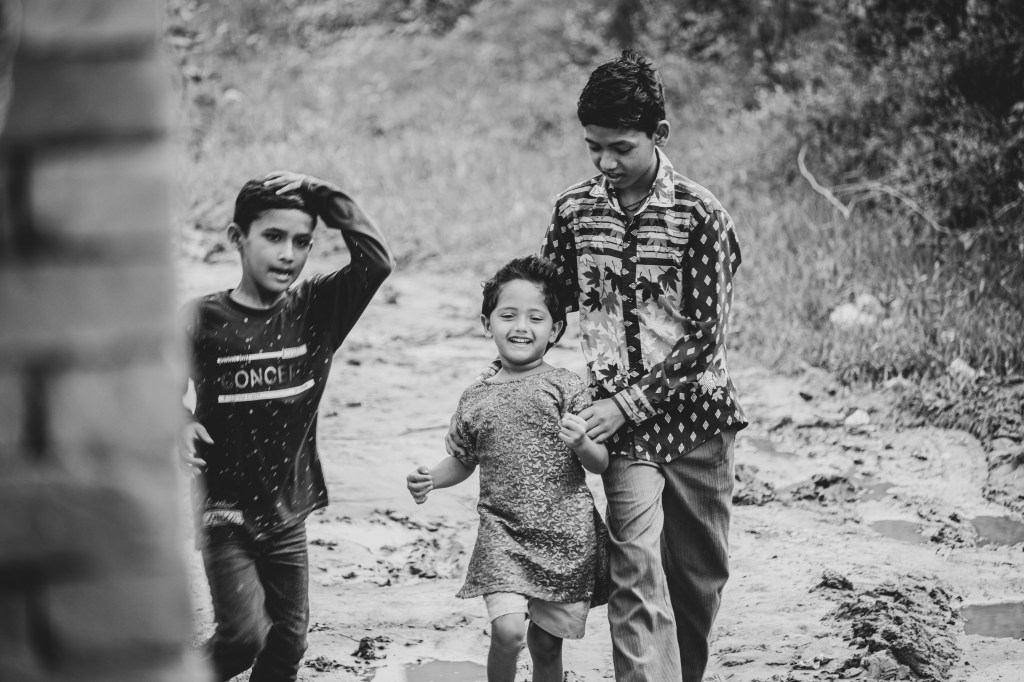
The Domestic Church: Teach Your Child How to Live in Peace

The first two Beatitudes we discussed focus on the personal attitudes of those poor in spirit and those who mourn. This month’s Beatitude shifts our focus to the interpersonal attitude of a merciful spirit toward others—the gentle disposition of heart that motivates one to relate to others kindly, with humility and consideration. Meek does not equate to weak; far from it! The biblical understanding of meekness is strength under control. The example of Jesus is that he never wavered on truth and goodwill in his relationship with humanity, even when he had every right to in our way of thinking.

Blessed are the meek, for they will inherit the earth.
~St. Matthew 5:5

One of the areas where a merciful spirit is most needed is in our differences with others. The environment of our homes is like an incubator for virtue or vice. Our children will model our behaviors; therefore, we must learn to be meek. We will consider how we can do that to help our children be meek. One version of the Bible expands on St. Matthew 5:5 this way: “Blessed [inwardly peaceful, spiritually secure, worthy of respect] are the gentle [the kind-hearted, the sweet-spirited, the self-controlled], for they will inherit the earth” (Amplified Modern Version). Let’s examine how we can train our children in meekness (gentleness and humility).

The Blessing of Reverence for the Lord

[Reverence for] the Lord is training for wisdom, and humility goes before honors.
~Proverbs 15:33

Reverence for the Lord often reads “fear of the Lord” in Sacred Scripture; the word “fear” causes some confusion when we don’t understand it according to the intention of the Hebrew language. Reverence comes much closer to its meaning. Reverence is the humble disposition of the heart toward the Lord and others. When we revere the Lord, we recognize our humble position before his sovereignty. When we revere others, we treat them with respect; this leads to inheriting the land, read: peace within our borders.

Do our children know how to revere the Lord and others? Do we teach them to be respectful when we enter our parish to worship in the Mass by quieting themselves, paying attention and participating in the responses of our worship? Do we model reverence for others? If we do, we teach them to be meek and humble.

The Blessing of Submission

Take my yoke upon you and learn from me, for I am meek and humble of heart; and you will find rest for yourselves. For my yoke is easy, and my burden light.
~St. Matthew 11:29-30

Jesus used the metaphor of a yoke that joined two oxen together to make the burden lighter for the oxen; they shared their load as a team. Here’s the thing: the oxen must submit to the yoke before they find relief from the burden of pulling the cart alone. Submission to our Lord’s will (yoke) is at the heart of all the blessings and promises throughout Sacred Scripture.

St. Paul learned to submit to the yoke the hard way! What we know of St. Paul is that he was a zealous and vengeful man before the Lord knocked him off his high horse. That encounter was a threshold to one humbling encounter after another.

We can sometimes observe Paul’s character before he was knocked off his high-horse in ourselves and our children when we are determined to stay on our high horse. Children can be loud with their objections to the yoke of humility or stubbornly quiet in their resistance; either way, there is a hardness, intransigence, or anger the Holy Spirit desires to tame.

Our children need the yoke of discipline because they need to learn that the world does not revolve around them. The blessing of discipline is that they learn to be humble, gentle, patient and forbearing, which leads to true and lasting peace from the Lord. Oh, friends, more than ever, it seems, our children need peace; the home is the surest place for them to receive it. How are we doing?

The Blessing of Accountability and Cooperation

However bad the situation you encounter may be, don’t become agitated and angry, for that will just make things worse. ~Father Jacques Philippe

Of course, we do not want to force our children into meekness by humiliating them. A humble heart is formed not by shaming or embarrassing our children but by allowing them to experience the consequences of their words and actions. We all can recall moments when a conflict arises in the home, and just when you think things are settling down, someone has to have the last word! Then, we are forced back on the hamster wheel of conflict. There is a better way.

We can seize the opportunity to discuss the injustice a child feels and guide them to respond with gentle honesty rather than react with irritation and resentment. But this takes our time and attention! First, to calm the room; second, to provide time alone for a child to think about their actions; and finally, to bring the family back together for a peaceful solution.

When our children know we will hold them accountable until they have worked together to resolve their dispute, they learn to calm themselves and become more cooperative in conflict. Whatever method you use for resolving conflict in your home, over time and with consistency, we can slowly shift the paradigm of our family life from bickering chaos to (somewhat) peaceful relationships as our children learn to be meek and humble of heart.

The Fruit of Meekness

Jesus taught that the meek would inherit the earth. What was he getting at? The culture teaches that aggressive, even harsh behavior will dominate the earth. The upside-down, right-side-up truth of the kingdom of God teaches that the humble will inherit the earth. Jesus referred to the theme in Psalm 37: the humble will inherit the blessing and peace of God in the “promised land” if, when we are wronged, we don’t take revenge but trust in God’s justice and mercy.

So, how do we nurture our children to be kindhearted, sweet-spirited and self-controlled? We choose influences that lead to a virtuous life by selecting activities that promote cooperation and problem-solving. Search the internet for “games that teach cooperation,” and you’ll find plenty of suggestions for all age groups. Playing cooperative games instills empathy for others, which is at the heart of meekness.

Meekness is a virtue that requires experience and maturity to develop in all of us. When we start attending to this when our children are young, the Holy Spirit will come alongside us with insight and discernment on how best to apply it to our children’s different personalities as they mature.

Lord Jesus, you said, “Blessed are the gentle, for they shall inherit the earth.” Help me to model strength under control before my children. Tame any ruthlessness I display toward others. Grant me a spirit of humility that strives for goodwill toward others and the discipline to consider others’ feelings in any disagreement.
~Amen

Ideas:
Teach older children how to care for younger children and rely on them to help you prepare to go places together.

Spend more time together as a family, participating in the community activities around you.

Play cooperative games like three-legged races or partner children together to navigate an obstacle course (for older children, blindfold one partner).

Build something together: block towers, legos, model sets or hobby projects.

~I am a freelance writer. This post first appeared in a periodical.

The Way of the Cross

They (the soldiers who had mocked, beaten, and humiliated Jesus) pressed into service a passer-by, Simon, a Cyrenian, who was coming in from the country, the father of Alexander and Rufus, to carry his cross.
~St. Mark 15:21

CONSIDER

Today, we are invited to enter the profundity of all ages–Holy Week. The excruciating events of this week grant us the most extraordinary depth of insight into Jesus’ heart. It is incumbent on our faith in God to enter this week with humility and thanksgiving, for in this week, we see in stark detail what Love beckons us to become.

Jesus taught his disciples that if they wanted to follow him, they must take up their cross (Matthew 10:28). And St. Paul reminded the believers in the Early Church that we complete Christ’s sufferings through our willingness to suffer as Christ suffered (Colossians 1:24). The economy of Salvation stupifies me sometimes—no, much of the time! We gain when we lose, live when we die, and are exalted only through humility.

Let’s keep that in mind as we consider Simon of Cyrene, who physically entered Christ’s suffering by carrying his cross for him. St. Luke observes that after laying the cross on [Simon], they made him carry it behind Jesus. Interesting point. Don’t you want to know what may have run through his mind as he followed the God-man, beaten beyond recognition, stumbling along before him? We do know this: the way (attitude) Simon carried Christ’s Cross changed the trajectory of his life, much in the way the Lord wants to transform our lives. (St. Simon spread The Gospel in northern Africa; he was eventually martyred for his faith in Christ around 100 A.D. His sons, Alexander and Rufus, were among the first believers in the Early Church in Rome. Because of the influence of St. Simon of Cyrene, we can assume The Church was graced with Tertullian, St. Augustine, St. Cyprian, and St. Monica from northern Africa)

If we genuinely desire to follow Christ to eternal life, we must first walk The Way of The Cross. But how exactly do we do that? Jesus told his disciples that he was the Good Shepherd who laid down his life for his sheep. The Greek meaning here is that Christ laid down his life, soul, heart, and mind. He calls us to do the same; how are we doing? Do we lay down our thoughts and words? Do we lay down our desires? How often do our tongues complain when a circumstance or someone messes with our plans? How often do we complain to others about someone who has offended us? How frequently do our minds refuse another’s need because it will cause us discomfort?

Isaiah prophesied that Jesus would be like a lamb, led to slaughter. Have you ever observed lambs? They just follow the sheep who follow the shepherd. Hmm? What if Simon complained and blamed Christ as he bore his burden to The Cross? What would have happened to Alexander and Rufus if Simon had complained about his burden of following Christ to his Cross? What happens in us when we spur suffering as if we don’t deserve it? How are the observers of our lives affected by our attitudes in the face of unwelcomed interruptions?

Every bit of inconvenience, interruption, and disruption is God’s will for us in that moment where we have the choice to lay down our life, soul, heart, and mind. Although minor inconveniences have little consequence, they provide practice in laying down our lives with an attitude of thanksgiving. When the consequential sufferings of our lives come along, we recognize them as the call of Christ to complete his suffering by carrying our cross in what he has allowed in our lives.
Christ went to the Cross to save us from the immense sufferings of sin and death. He allows whatever temporal sufferings–the diagnosis, the betrayal, the tragedy, the loss–to save us from ourselves along the way. He saves us in the circumstances, and our mind, body, and soul will be transformed into his likeness! That is the way of The Cross.

PRAY

Shepherd of my heart and Savior of my life, I exalt you; my soul magnifies you! Yet I so quickly magnify my molehills into mountains when something comes along to mess with my control. Please forgive me for my pride, fear, and self-absorption. You created me in your image; it takes a lifetime of surrendering my will to you. Why do I delay it by resisting Your will for me in each circumstance? Why do I doubt your everlasting love for me? You will never lead me where you do not want me to go, but sometimes I do. Lead me back to the Way of the Cross, the path of my salvation. ~Amen